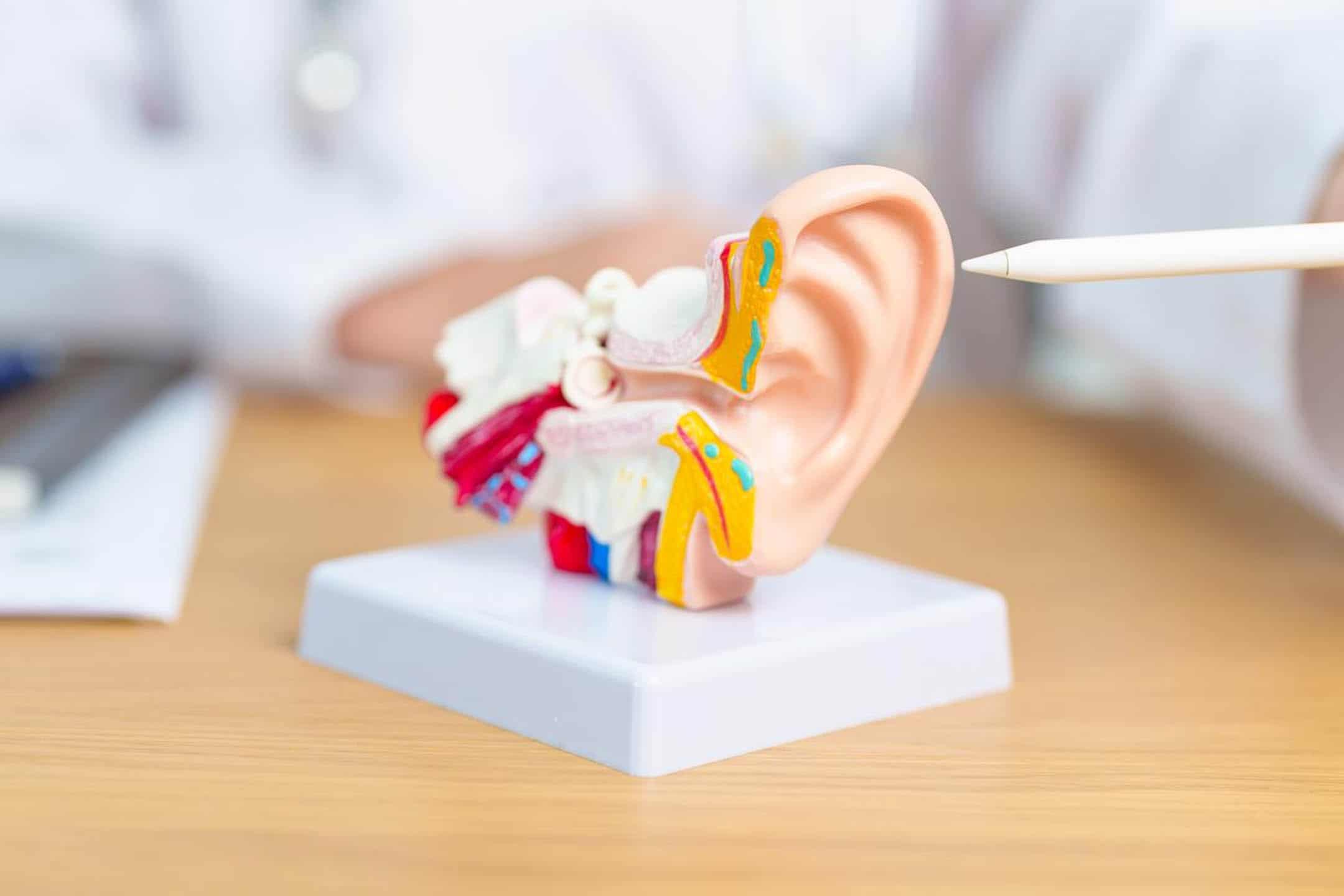
If your child seems to be hearing less clearly, it is possible that glue ear is the explanation. It often develops after a cold or ear infection and is very common in young children.
Glue ear happens when fluid builds up behind the eardrum. The fluid is not usually infected, but it can stop the eardrum moving as freely as it should. This can cause temporary hearing loss, often making sounds seem muffled or distant.
Many cases improve without treatment. However, persistent glue ear can affect children’s hearing, speech, learning and behaviour, particularly if it continues for several months. Knowing the signs of glue ear can help parents decide when their child needs an assessment.
What is glue ear?
Glue ear is the everyday name for fluid in the middle ear, the air-filled space behind the eardrum. Its medical name is otitis media with effusion.
The middle ear is connected to the back of the nose by the eustachian tube. This small tube helps equalise pressure and allows fluid to drain. In children, the eustachian tube is shorter and more horizontal than in adults, so it can become blocked more easily.
When this happens, fluid can collect behind the eardrum. It may be thin and watery or thick and sticky, which is where the name “glue ear” comes from.
Glue ear is particularly common in children because they have frequent colds and their eustachian tubes are still developing. It often affects both ears, although it can affect one ear only.
Glue ear symptoms in children
The most common glue ear symptom is reduced hearing. A child may not complain that their hearing has changed because it can happen gradually. Instead, parents, carers or teachers may notice small changes in how they respond.
Signs of glue ear include:
- Asking people to repeat themselves
- Turning up the volume on the television or tablet
- Mild ear discomfort
- Ringing or buzzing sounds
- Not responding when called, especially from another room
- Speaking more loudly than usual
- Finding it difficult to follow conversations in noisy places
- Becoming tired, frustrated or distracted at nursery or school
- Seeming inattentive or changing their behaviour
- Delayed or unclear speech, particularly if hearing has been affected for a long time
- Balance difficulties
A temporary hearing change does not mean that a child is ignoring you or being deliberately inattentive. They may simply be missing parts of speech, especially quieter sounds or words spoken in a busy environment.
Long-lasting glue ear can affect a child’s speech development and academic progress, which is why hearing, communication and behaviour changes are important signals for parents to notice.
What causes glue ear in children?
Glue ear often develops after a cold, an upper respiratory infection or repeated ear infections. Inflammation around the nose and throat can affect the eustachian tube and stop the middle ear from ventilating properly.
Common contributing factors include:
- Frequent colds
- Recent ear infections
- Allergies affecting the nose
- Enlarged adenoids, which sit at the back of the nose
- Exposure to smoke
- A tendency towards eustachian tube problems
Adenoids are small pads of tissue that help the body respond to infection in early childhood. If they are enlarged or inflamed, they can affect the opening of the eustachian tubes and contribute to fluid build-up.
Some children are more likely to have persistent glue ear, including those with Down’s syndrome or a cleft palate. These children may need earlier or more regular assessment as glue ear is less likely to clear without support.
Glue ear vs ear infection: what is the difference?
Glue ear and an ear infection both affect the middle ear, but they are not the same.
An acute ear infection often develops quickly. It may cause earache, a high temperature, irritability, poor sleep or discharge from the ear. The middle ear becomes inflamed and may be infected with a virus or bacteria.
Glue ear is fluid behind the eardrum without an active infection. It is more likely to cause muffled hearing than severe pain or fever. It can develop after an ear infection has settled, but it can also follow an ordinary cold.
Unlike ear infections, antibiotics do not usually help glue ear. The focus instead is on monitoring hearing, supporting the child’s communication and considering treatment if the fluid does not clear.
Does glue ear go away on its own?
Many cases of glue ear resolve naturally, often within around three months. For this reason, a monitoring period is commonly recommended if a child is otherwise well and their hearing or development is not being significantly affected.
During this period, a clinician may advise hearing checks and monitoring. Some children may be suitable for autoinflation, which involves using a special balloon to help open the eustachian tube and encourage fluid to drain. As this treatment involves practising a technique regularly, it is not usually recommended for children under three.
While waiting, it can help to:
- Speak clearly and face your child when talking
- Reduce background noise where possible
- Tell nursery or school if your child is having hearing difficulties
- Encourage teachers to seat your child closer to the front during group activities
- Attend all follow-up appointments and hearing tests
If you are worried about your child’s speech, language, learning or behaviour, it is sensible to seek advice rather than waiting for the problem to settle by itself.
Glue ear treatment: when are grommets considered?
Glue ear treatment depends on how long the fluid has been present, the degree of hearing loss and how much it is affecting a child’s daily life.
Where glue ear persists and is affecting hearing, communication or learning, a specialist may discuss options such as hearing support or grommets. Grommets are very small tubes placed through the eardrum during surgery. They allow air into the middle ear and help prevent fluid building up again.
Find out more about child grommet insertion and when it may be considered.
The decision to use grommets is individual. It should take account of your child’s hearing, symptoms, development and the likely benefits and risks. NICE recommends a shared discussion between clinicians and parents or carers when grommets are being considered.
If your child is already due to have grommets, our grommet insertion recovery timeline explains what families can expect after the procedure.
When should a child see an ENT specialist for glue ear?
It is worth arranging an assessment with an ENT specialist if you are concerned that your child is not hearing well, particularly if this is affecting speech, behaviour or learning.
A specialist assessment can be helpful when:
- Hearing problems last for several weeks or keep returning
- Glue ear has not improved after a period of monitoring
- Your child’s speech or language development is a concern
- Nursery or school has noticed listening or learning difficulties
- Your child has repeated ear infections
- Your child seems to have balance difficulties
- There is persistent fluid in one ear only
- Your child has Down’s syndrome, a cleft palate or pre-existing hearing loss
A specialist can examine the ears, arrange or review a hearing test and discuss whether monitoring, hearing support or treatment is appropriate.
Seek urgent medical advice if your child is very unwell, has swelling or redness behind the ear, severe ear pain, a high fever that is not settling or a sudden change in hearing.
Supporting your child’s hearing and communication
Glue ear can be difficult to spot because a child may adapt to hearing sounds less clearly. Trust your instincts if something seems different.
Persistent hearing changes deserve attention, even if your child is otherwise well. Early assessment can help identify glue ear and make sure hearing, speech and learning are appropriately supported.
If your child’s hearing seems dulled or they are showing signs of glue ear, The ENT Consultancy’s specialists can assess the cause and discuss suitable next steps.
Get in touch today to book an appointment for your child if you suspect glue ear is causing hearing difficulties.
Glue ear in children FAQs
- What are the symptoms of glue ear in children?
The main symptom is temporary hearing loss. A child may ask for repetition, turn up the television, seem inattentive, speak loudly or struggle to follow conversations in noisy places. Long-lasting hearing difficulties can also affect speech, behaviour and learning.
- Does glue ear go away on its own?
Many cases clear naturally within around three months. A child may need monitoring and hearing checks while waiting for the fluid to settle. Persistent symptoms or concerns about hearing, speech or learning should be assessed.
- Is glue ear an ear infection?
No. Glue ear is fluid behind the eardrum without an active infection. It can develop after an ear infection or cold, but it usually causes muffled hearing rather than severe ear pain or fever.
- Do grommets help glue ear?
Grommets can help selected children with persistent glue ear and hearing loss. They allow air into the middle ear and reduce fluid build-up. A specialist will discuss whether they are appropriate for your child.
- Can glue ear affect speech?
Glue ear can make speech harder to hear clearly. If it lasts for a long time, particularly during important stages of language development, it may affect speech and communication. Hearing or speech concerns should be discussed with a clinician.