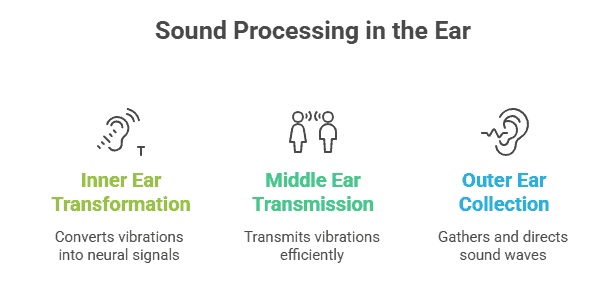
Hearing loss can range from partial to complete and may develop gradually or suddenly. Understanding the difference between these types and recognising the symptoms is crucial for timely diagnosis and treatment. Hearing works by capturing sound waves through the outer ear, which then travel through the middle ear to the inner ear, where they are converted into electrical signals sent to the brain. Any disruption along this pathway (whether due to ear infections, damage to the ear structures, or neurological issues) can result in hearing loss. Early identification of hearing difficulties, especially following ear infections, can help prevent further complications and improve outcomes.
Understanding Hearing Loss
Hearing loss can be classified as either partial or complete. Partial hearing loss means that some sounds are difficult to hear, but others remain audible, while complete hearing loss refers to a total inability to hear sounds in one or both ears.
The ear’s complex anatomy involves the outer ear collecting sound, the middle ear transmitting vibrations and the inner ear converting these into signals for the brain. Problems at any stage, such as fluid buildup from ear infections or damage to the hair cells in the cochlea, can impair hearing. Recognising how hearing works helps in understanding why certain symptoms occur and the importance of addressing issues promptly.
Common Symptoms of Hearing Loss
Difficulty Understanding Speech, Especially in Noisy Settings
One of the earliest signs of hearing loss is struggling to follow conversations, particularly in environments with background noise. This difficulty arises because the ear cannot filter out competing sounds effectively, making speech unclear.
Frequently Asking Others to Repeat Themselves
If you find yourself often asking people to repeat what they have said, it may indicate that your hearing is impaired. This symptom can be frustrating as it often affects social interactions.
Trouble Hearing High-Pitched or Soft Sounds
Hearing loss often affects the ability to detect high-frequency sounds such as birdsong, children’s voices or the ringing of a phone. Soft sounds may also become harder to hear, impacting everyday communication.
Ringing, Buzzing or Other Noises in the Ear (Tinnitus)
Tinnitus is the perception of noise or ringing in the ears without an external source. It can accompany hearing loss and may be caused by ear infections or damage to the auditory system.
Needing to Turn Up the Volume on Devices
Increasing the volume on the television, radio or phone beyond normal levels can be a sign of hearing loss. This adjustment often happens gradually and may go unnoticed initially.
Triggers and Causes of Hearing Loss
Age-Related Hearing Decline (Presbycusis)
Presbycusis is the gradual loss of hearing associated with ageing. It typically affects both ears and results from changes in the inner ear and auditory nerve.
Noise-Induced Damage
Exposure to loud noises, whether from work, music or environmental sources, can damage the delicate structures of the ear. This damage can lead to permanent hearing loss.
Ear Infections or Blockages
Ear infections can cause temporary or permanent hearing loss by causing inflammation, fluid buildup or damage to the ear structures. Blockages from ear wax or foreign objects can also impair hearing.
Ototoxic Medications
Certain medications can harm the ear’s sensory cells, leading to hearing loss. These include some antibiotics, chemotherapy drugs and high doses of aspirin.
Genetic Factors and Congenital Conditions
Some people are born with hearing loss or have a genetic predisposition to develop it later in life. These conditions can affect the ear’s development or function.
Head or Ear Injuries
Trauma to the head or ear can damage the auditory system, resulting in hearing loss. This may be immediate or develop over time.
Risk Factors That Can Worsen Hearing Loss
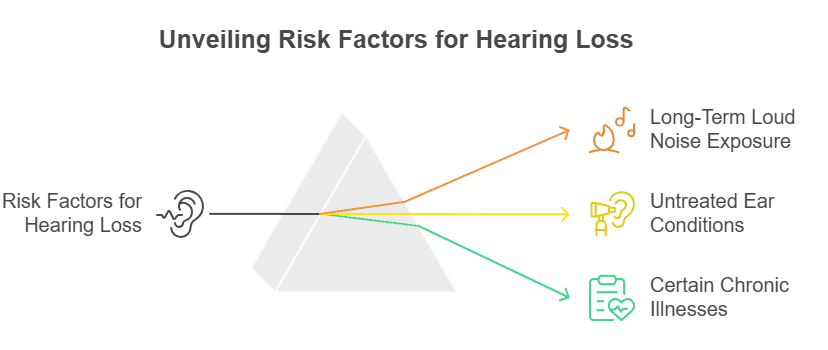
Hearing loss can worsen over time due to preventable factors like constant loud noise, untreated health conditions such as diabetes or high blood pressure, and lifestyle habits like smoking or heavy drinking. Some medications may also damage the inner ear. Protecting your ears and managing these risks can help preserve your hearing.
Long-Term Loud Noise Exposure
Repeated or prolonged exposure to loud sounds increases the risk of permanent hearing damage. Using hearing protection in noisy environments is advisable.
Untreated Ear Conditions
Ignoring ear ear problems can lead to worsening hearing loss and complications such as chronic infections or damage.
Certain Chronic Illnesses (e.g. Diabetes, High Blood Pressure)
Chronic health conditions such as diabetes can affect blood flow and nerve function in the ear, contributing to hearing loss.
When to Seek Medical Advice
Sudden Hearing Loss in One or Both Ears
Sudden hearing loss is a medical emergency. Immediate consultation with an ear specialist is crucial to improve the chances of recovery.
Rapid Changes in Hearing Ability
If your hearing deteriorates quickly over days or weeks, seek prompt medical evaluation to identify and treat the cause.
Accompanying Symptoms Such as Dizziness or Pain
Hearing loss accompanied by dizziness, ear pain or discharge may indicate infection or other serious conditions requiring urgent attention.
Diagnosis and Assessment
Hearing Tests (Audiometry)
Audiometry is a key diagnostic test that measures your ability to hear sounds at different pitches and volumes. The ENT Consultancy offers comprehensive ear tests to assess hearing function accurately and guide treatment plans.
Physical Examination of the Ear
A thorough examination of the ear canal and eardrum helps identify infections, blockages or structural issues. The ENT Consultancy provides expert physical ear assessments using specialised equipment.
Specialist Referrals
In some cases, further investigations or referrals to other specialists such as audiologists or neurologists may be necessary to fully understand the cause of hearing loss and plan appropriate care.
Hearing Loss: Recognising Symptoms and Taking Action
Hearing loss can develop through various symptoms including difficulty understanding speech, frequent requests for repetition, trouble hearing soft or high-pitched sounds, tinnitus and the need to increase device volumes. Common triggers include age-related decline, noise exposure, ear infections, ototoxic medications, genetic factors and injuries. Risk factors such as long-term loud noise exposure, untreated ear conditions and chronic illnesses can worsen hearing loss.
Early medical intervention is crucial, especially if hearing loss occurs suddenly or is accompanied by dizziness or pain.
If you are experiencing any symptoms of hearing loss or have concerns about your ear health, book a consultation with a specialist at The ENT Consultancy today. Early evaluation is key to effective management and better outcomes.