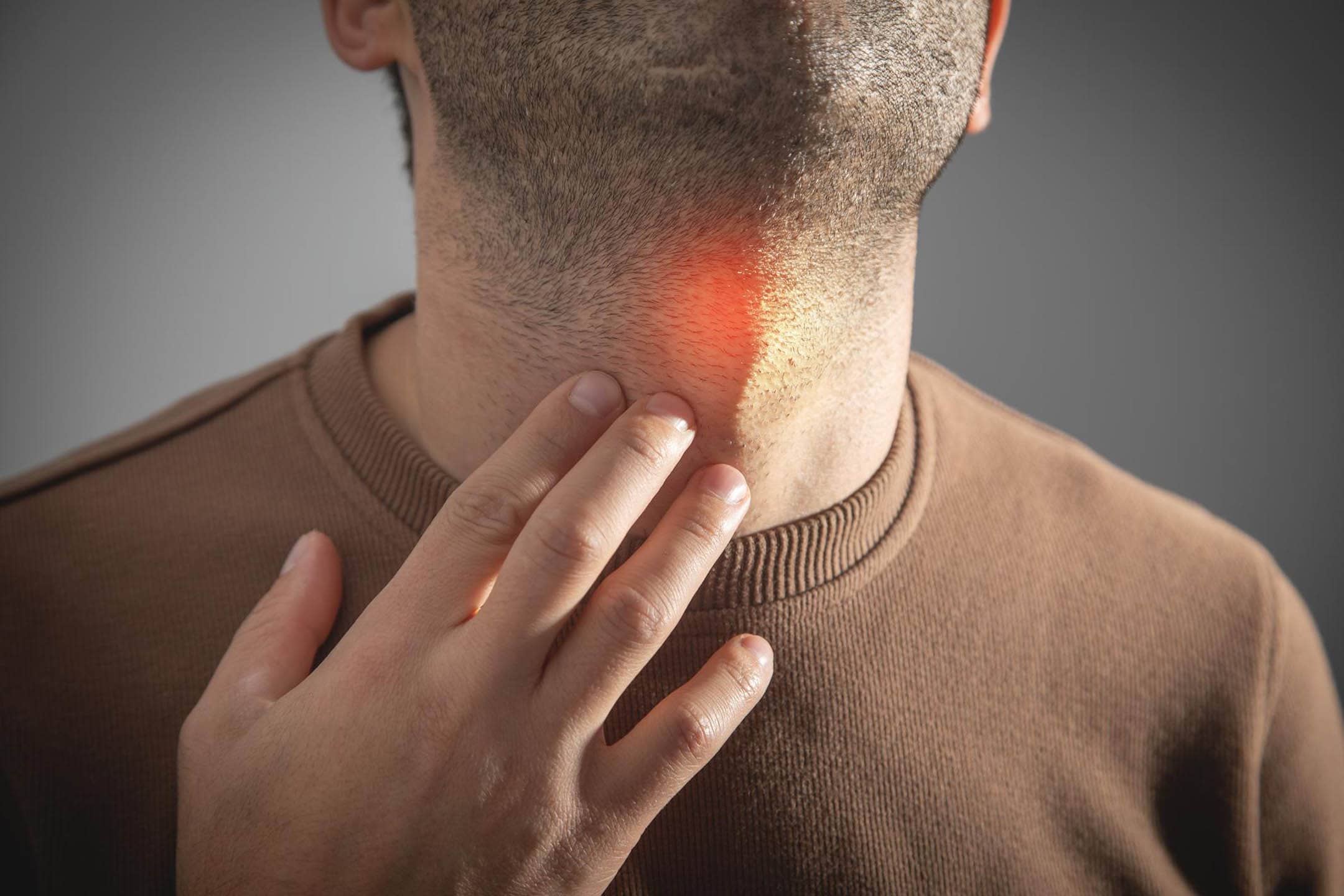
Earache in adults can range from mild irritation to intense, disruptive pain. Importantly, it is not always caused by an ear infection. Problems affecting the jaw, throat, teeth or sinuses can all refer pain to the ear, making the source less obvious. Understanding earache symptoms in adults helps you recognise when discomfort is likely to settle on its own and when it needs medical assessment by an ENT specialist.
Common Earache Symptoms
Adult ear pain can present in several different ways, depending on which part of the ear or nearby structures are involved.
Ear Pain
Ear pain may feel sharp, stabbing, dull, throbbing or burning. Some people experience constant discomfort, while others notice pain that comes and goes. Pain that worsens when lying down is often linked to middle ear pressure or infection, as fluid movement increases discomfort. Recognising the quality and timing of pain is a key part of identifying adult ear pain signs.
Feeling of Pressure or Fullness
A blocked or pressurised sensation in the ear, similar to what you feel during air travel, is very common. This often points to fluid behind the eardrum or problems with the Eustachian tube, which normally equalises pressure between the ear and the throat. While not always painful, this pressure can develop into ear ache if it persists.
Reduced Hearing
Muffled hearing or a sudden reduction in hearing can occur alongside earache. This may be caused by fluid build‑up in the middle ear, infection, or impacted earwax. Any noticeable change in hearing with pain should be taken seriously, as it can indicate inflammation or blockage affecting sound transmission.
Ear Tenderness
Pain when touching or gently pulling the outer ear often suggests inflammation of the ear canal, known as otitis externa. This differs from deeper ear problems, where touching the outer ear usually does not worsen pain. Tenderness can help distinguish between external and middle ear causes.
Symptoms That Often Occur Alongside Earache
Earache in adults frequently occurs with symptoms elsewhere in the head and neck, reflecting shared nerve pathways.
Jaw Pain or Clicking
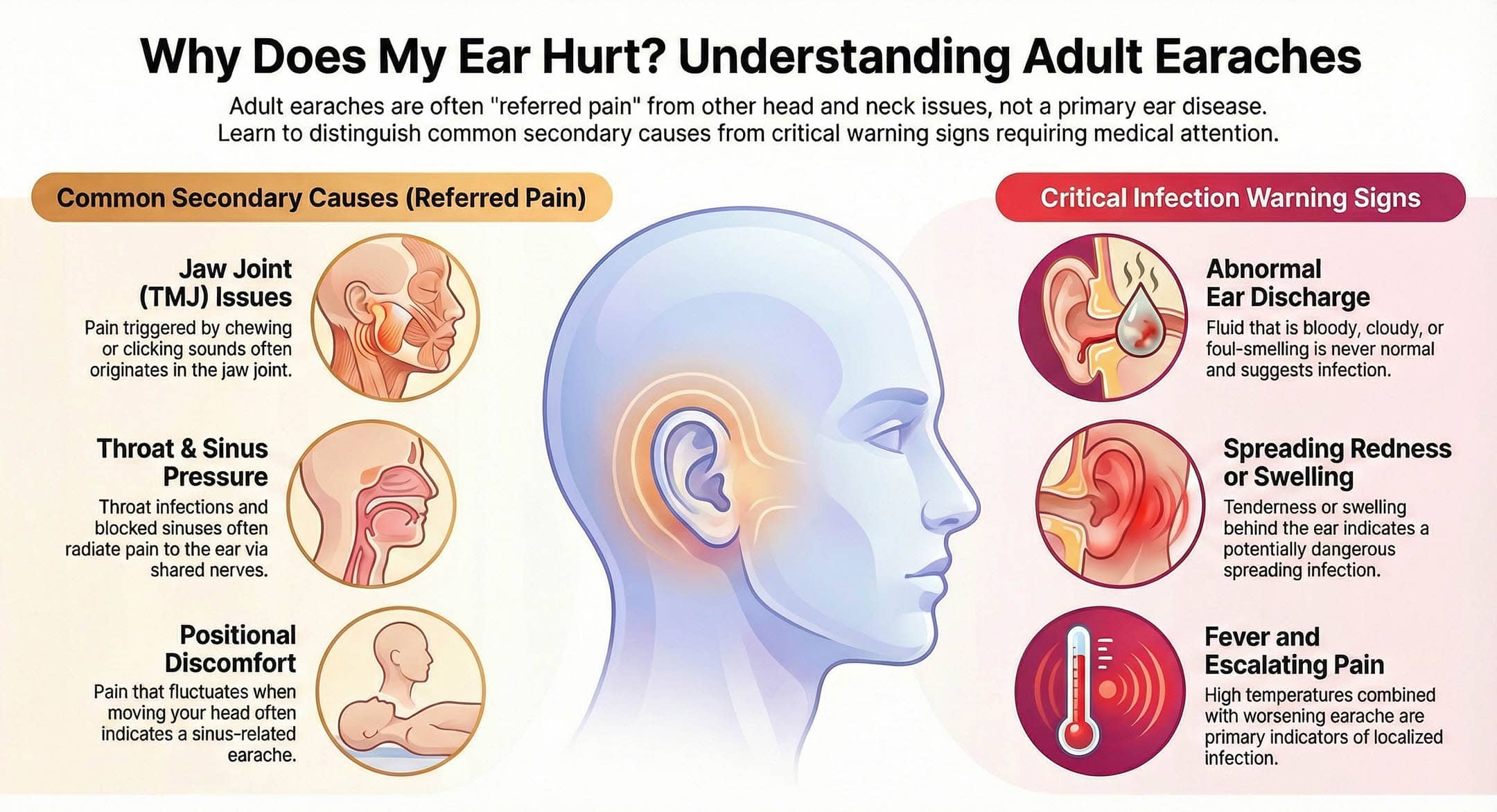
Ear pain that worsens with chewing, talking or jaw movement may originate from the temporomandibular joint (TMJ). Clicking, popping or stiffness in the jaw suggests a jaw joint disorder rather than a primary ear condition, even though the pain feels deep inside the ear.
Sore Throat
Throat infections, tonsillitis or ongoing throat irritation can cause pain in the ear. This happens because the ear and throat share nerve supply. In these cases, the ear itself may appear normal on examination, making it important not to assume all ear pain is due to ear disease.
Sinus Pressure or Facial Pain
Blocked or infected sinuses can cause pressure and pain that radiates to the ear. This is often described as a deep, aching sensation and may be accompanied by nasal congestion, facial tenderness or headache. Sinus‑related earache often fluctuates with changes in head position.
Headache
Headache alongside earache may point to infection, sinus disease or pressure‑related problems. While headaches are common, a new or worsening headache with ear pain deserves careful assessment to rule out underlying causes.
Signs of Infection
Infection is a common concern when adults develop ear pain, but it usually presents with additional warning signs. Fever often indicates infection, particularly if the earache is severe or worsening. Ear discharge, whether clear, cloudy, bloody or foul‑smelling, is never normal and suggests infection or a perforated eardrum. Redness, swelling around the ear, or pain behind the ear can indicate a spreading infection and needs prompt medical assessment, as complications are more likely if treatment is delayed.
Less Common but Serious Symptoms
Some symptoms associated with earache are uncommon but still require urgent attention.
Severe or Sudden Hearing Loss
A rapid or marked loss of hearing alongside ear pain is a red flag. Sudden hearing loss should always be assessed urgently, as early treatment can significantly affect recovery.
Dizziness or Balance Problems
Vertigo or unsteadiness with ear pain may indicate involvement of the inner ear. When dizziness is prominent, especially with nausea or vomiting, specialist ENT assessment is important to identify the cause and prevent falls or further complications.
Facial Weakness
Weakness or drooping on one side of the face together with earache is a medical emergency. This combination may signal nerve involvement or serious infection and requires immediate medical review.
When to Seek Medical Advice
Knowing when to see a doctor for earache can prevent unnecessary suffering and complications. Persistent earache rarely resolves without appropriate treatment, particularly when pain lasts more than a few days. Worsening symptoms, such as increasing pain, swelling or the development of new features like discharge or hearing loss, suggest complications and should be assessed promptly. Recurrent earache, even if it settles between episodes, needs investigation to identify the underlying cause and prevent repeated flare‑ups.
What to expect while an ear infection heals
As an ear infection heals, pain and pressure should gradually ease over a few days. Muffled hearing can take a little longer to improve if fluid or swelling remains, but worsening pain, discharge, fever or hearing loss should be assessed promptly.
Earache Is a Symptom Not a Diagnosis
In adults, earache has many possible causes, and the ear itself is not always the source of the problem. Mild discomfort may settle with simple measures, but persistent pain, hearing loss, discharge, dizziness or neurological symptoms should never be ignored. Early assessment by an ENT specialist helps identify the true cause, prevents long‑term damage and ensures serious conditions are not missed.
If you’re experiencing ongoing or worrying earache symptoms, contact The ENT Consultancy today to arrange a specialist assessment and get clear, expert advice.